



Photographs by Terence Bogue
10 – 28 April 2007
Clearsoundings, Christine Abrahams Gallery, Melbourne
Choosing to hand-build with Bone china and French Limoges porcelain – materials that in many ways determine their own language – Henderson’s practice is one of continued challenge and experimentation. Her inquisitiveness for what people and cultures carry within them inspires her passion for making. Like drawings these works are part of an ongoing exploratory activity and the results of this individual pursuit are evocative.
Henderson’s striving is also a pursuit of pure perception – a release from our habitual blindnesses. Informed by her experience of the changing natural world and her delight in the orders and rhythms of language, calligraphy and architecture, her work quietly posits the interrelationship of all things.
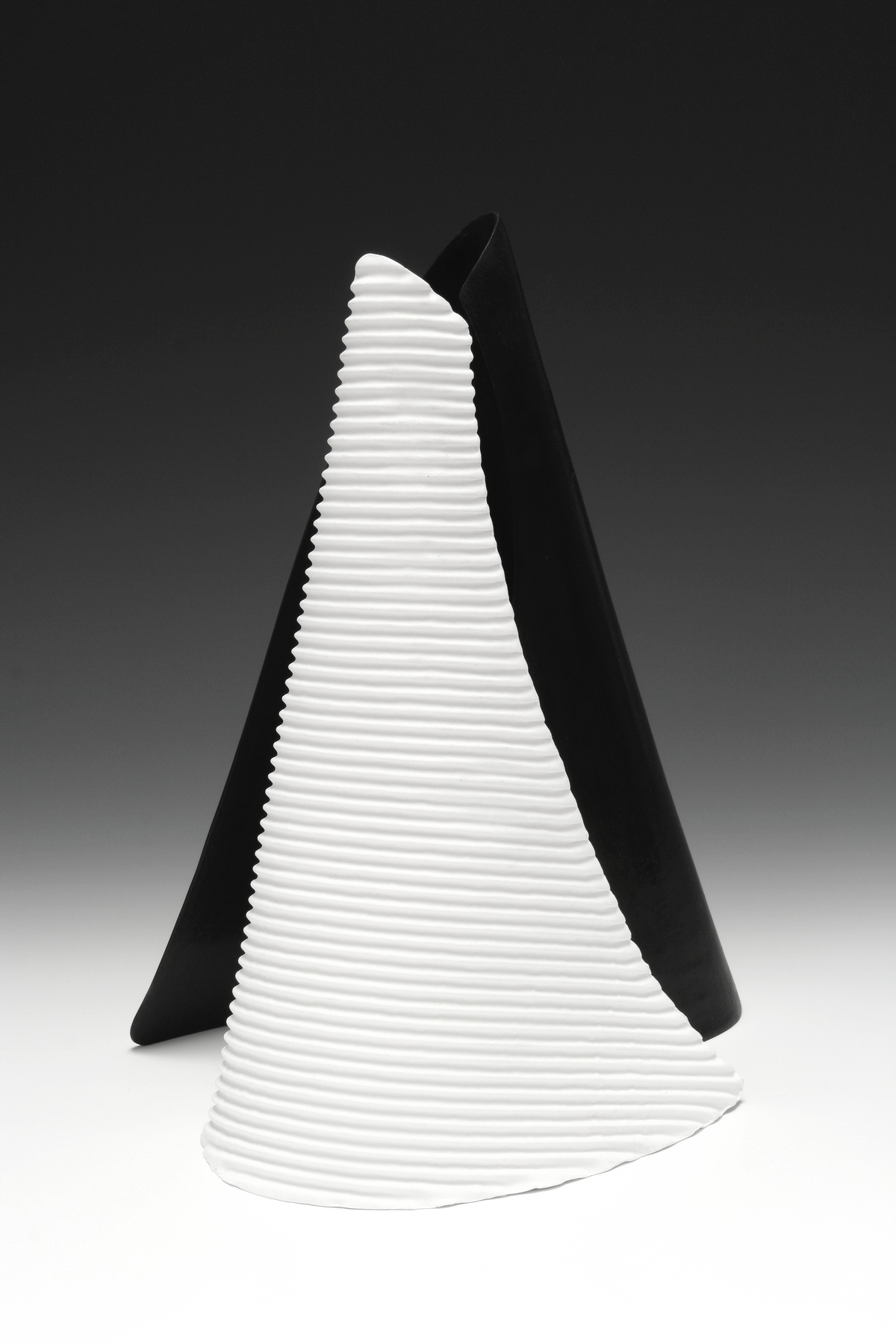
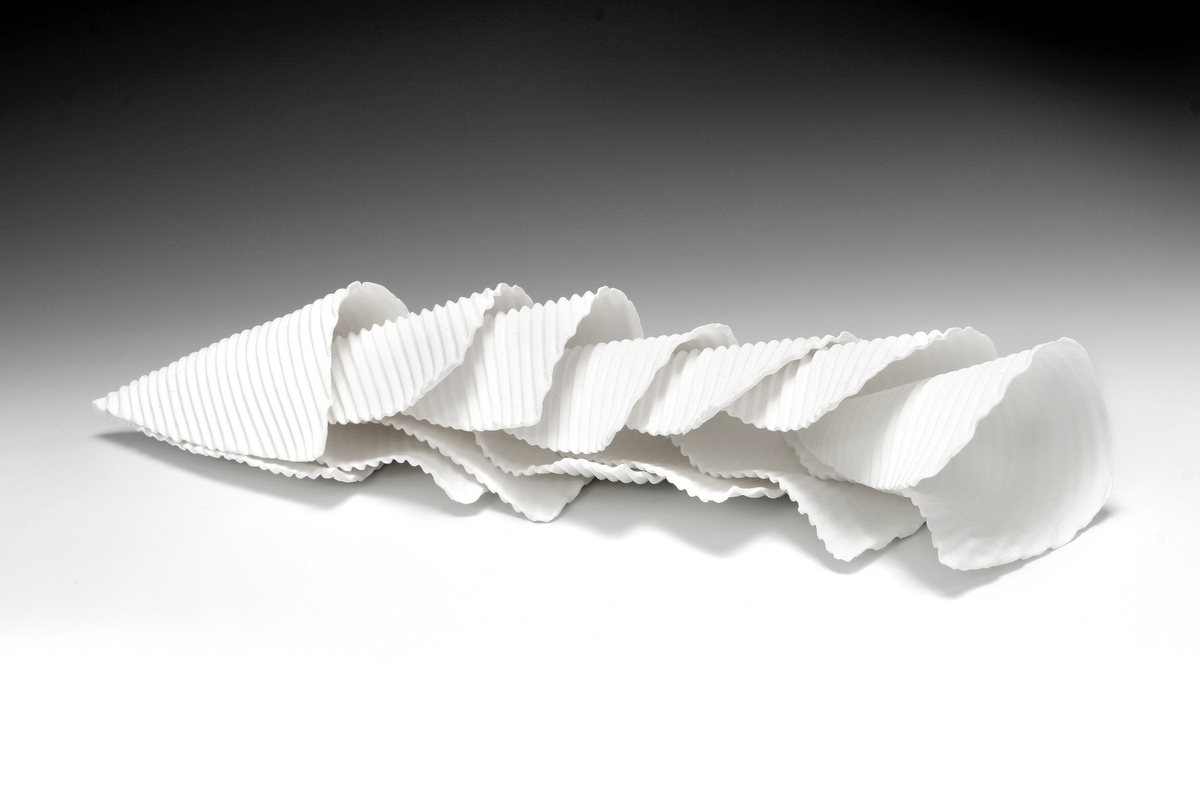
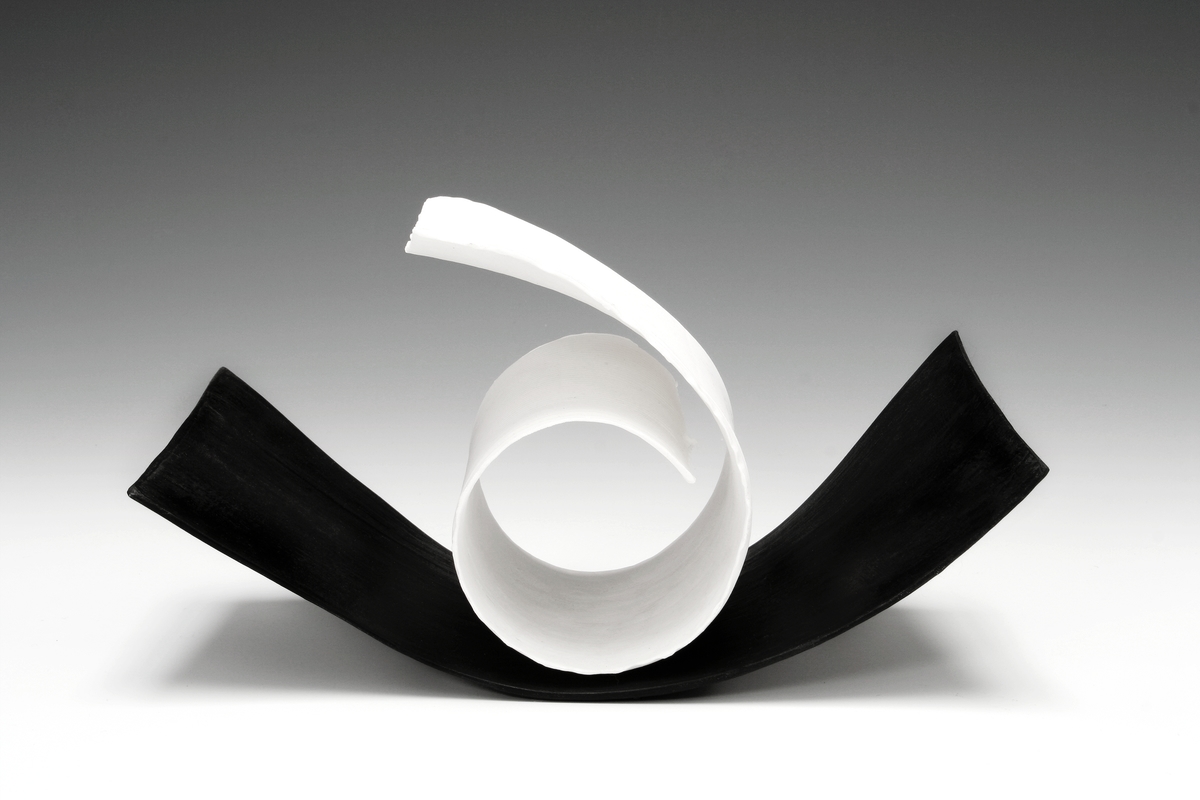
Finding the subtle structure and movement of each form takes time. Observations are worked through the artist’s intimate world of memory, intuition and emotion. Often a simple outlined shape creates the basis of each piece and the flow of a single movement becomes its unique structure. The relation between the works – a kind of loose seriality or lineage – is enhanced by the limited palette, pure materials and surface articulation. With a sense of both the handmade and mechanical mark, surfaces appear fragile and translucent or burnished to a finish that resembles wood. Sameness and subtle differences trace the circuit from mind to hand.
Like a place toward which the mind journeys, tied to the sensibility of the maker, these works inhabit a wavering field of absorption and encounter. Receding spaces and oncoming forms, gatherings and dissolution in a ritual architecture of gesture. Their formlessness is akin to the temporal unfolding of drawing.
Form and void. Translucence and opacity. Line and light. Henderson’s work gives primacy to the experience of looking and seeing. There is striation in white and smoothness in black. Balanced in the Tao of the circle – the white and the black transform into each other; as insights emerge from the darkness of the mind to the light of consciousness. Sometimes patterning cuts across the form, to flay and jag papery edges in the kiln. We recognise structural elements loosely as cone, circle, crescent, ellipsis, fold and scroll, but each form seems to have found its own shape; its own intrinsic nuanced rhythm. There are some resemblances recalling the convolutions of a shell, the cascade of a mantle, a floating seed pod, the texture of sun-bleached bone. There is the suggestion of irrevocable change, of some momentary alteration of the light. Within this idiosyncrasy of the immediate lies an emotional core.
These forms appear reticent – ever receding and ever promising – at the edge of communication. In stillness and quietude, they explore the relationship between the visible and the invisible, and the way the material world suggests or recalls ideas, memories and mysteries with a delicacy that is not necessarily the opposite of strength.
Martina Copley
 TITANIA HENDERSON