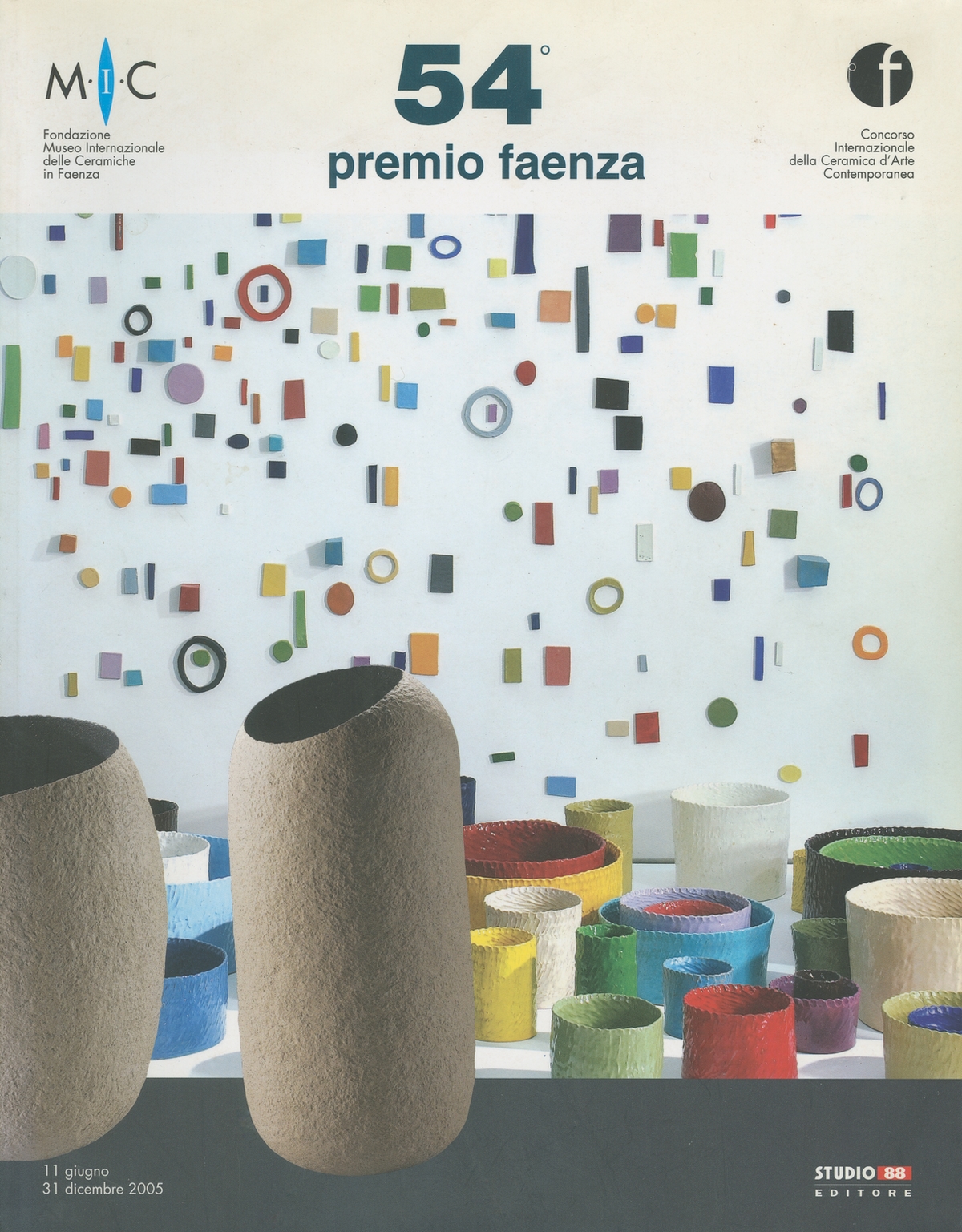
Now in its 54th year, the Faenza International Ceramics Competition can barely avoid reflecting on its long, prestigious history, and on its future.
The past throws up the signs of a vitality and commitment that allowed the emergence of artistic personalities who are now renowned, a fertile dialogue between the art of ceramics and its sister arts, and increasing interest from the world of culture, the public and specialists in the works that have been presented at the competition over the years.
The MIC’s modern and contemporary collections have been considerably enriched, precisely thanks to this event; the sec-fion of the MIC that is dedicated to the “Premio Faenza” is one of the most comprehensive collections of the many results that ceramics has produced in the artistic field.
The international scene today boasts a number of similar events; but the “Premio Faenza” maintains an undisputed prestige, proof of which is provided by the wide participation of artists with different cultural and geographical origins – this year, from 62 nations.
Nevertheless, precisely due to the spheres of reference it has reached, it needs to be able to respond adequately to the deep transformations of a geography and cultural context that in recent years have seen marked changes of direction compared to the methods and forms of expression of just o few years ago.
Indeed, the open participation remains very wide, and is a formula that the Competition intends to retain in order to encourage new talents to emerge; yet there appears to be limited participation among already successful artists-ceramists or those artists who in recent years have approached ceramics, having decided that is an inimitable medium for their expressivity, on the same level as other materials; this latter point is extremely positive for the development of ceramic arts. For the moment, these innovative proposals are presented in other places, and perhaps the Competition’s competitive formula is not suitable for artists who have already won awards or those who regularly exhibit in art galleries. This is a phenomenon which we should think about if we are to identify the most appropriate occasions for dialogue between the upcoming fringes of expressive research, technical innovation and the carefully selected applications that come from all over the world.
Such a comparison is bound to bring about fertile and unpredictable connections.
New methods and purposes will also need to be found in terms of cultural geography; it will be necessary to promote the Competition more in areas which are coming onto the international scene and in those which, while significant. have not be subject to much direct attention.
For now, these considerations can only provide signs of the determination with which the Fondazione MIC intends to commit itself to ensuring that the Faenza international Ceramics Competition keeps its undisputed cultural role.
Dante Stefani
President, International Museum of Ceramics Foundation
 TITANIA HENDERSON